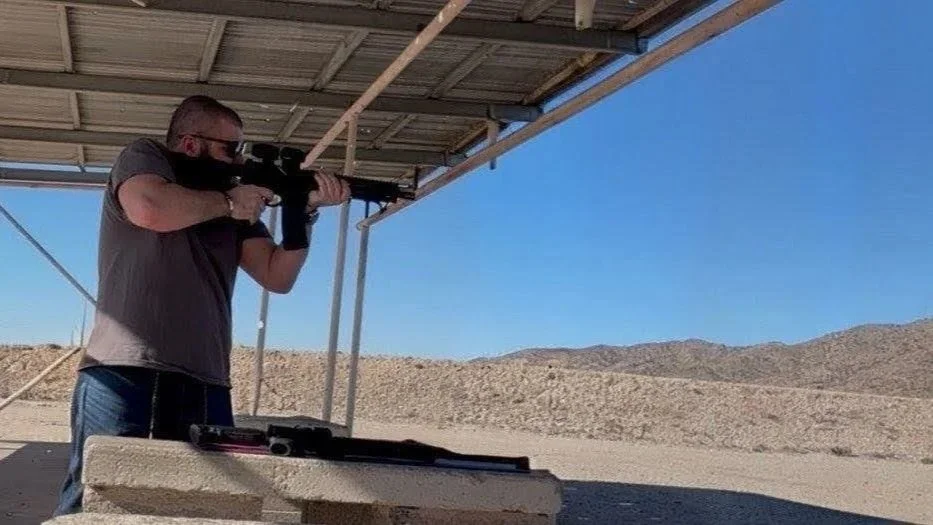
About the Founder AND pRINCIPAL aDVISOR

James Pease is an operational advisor specializing in ammunition manufacturing systems, production performance, and manufacturing risk mitigation.
He works with manufacturers, ownership teams, and investors to stabilize operations, eliminate inefficiencies, and unlock hidden production capacity within existing production environments.
He is frequently brought in to resolve complex production challenges, evaluate operational risk, and guide organizations through periods of scaling, restructuring, or performance instability.
James did not set out to build a career in the ammunition industry. He stepped into it at 18 years old, two weeks after his birthday, when a full-time opportunity presented itself. What began as a packaging position quickly became something more. Within his first day in the loading department, he was outproducing seasoned operators. Within a few short years, he moved from doing the work to leading the people doing it.
Areas of Expertise
Ammunition Manufacturing Systems
Production Workflow Optimization
Manufacturing Risk Mitigation
Load Development & Ballistic Consistency
Operational Scaling & Facility Launch
From Entry-Level to Production Leadership
James' early career was defined by rapid growth. Starting in packaging, he moved quickly into ammunition loading operations, where his technical aptitude and production discipline became immediately apparent.
Within three years, he stepped into leadership roles. During the following years, he helped expand operations from a small team into a multi-department manufacturing environment, contributing to the development of production systems, facility growth, and equipment output that exceeded manufacturer specifications.
By his early twenties, he was managing teams significantly older than himself, a challenge that sharpened the leadership style that would later define his career: direct communication, clear expectations, and disciplined operational execution.
What Sets James Apart
Systems and Efficiency Architecture
James is known for walking into a facility and quickly identifying inefficiencies. He is trained to see constraints that are often missed. His approach is direct and measurable:
Identify the true operational limit of a system, machine, or team
Establish safe, scalable boundaries
Increase output without compromising safety or quality
He specializes in:
Ammunition assembly optimization
Mechanical troubleshooting and retooling
Component performance refinement
Scrap reduction and labor waste elimination
Scheduling and production planning
Total cost of ownership analysis
His work has consistently resulted in increased machine output, improved quality control systems, and long-term operational sustainability. The systems that he implements remain in place long after his departure.
Leadership Philosophy
James’ leadership evolved from command-driven management to structured development and competency-based growth.
He believes:
Hiring should be decisive and high performers should be promoted quickly.
Growth happens in developmental challenge. Ceilings should be removed, not imposed.
Motivation and structure matter because not everyone begins with the same foundation.
Communication between management and the production floor determines profitability.
He strengthens teams by setting higher performance standards while building systems that allow employees to succeed safely and at scale.
Lessons Forged in Experience
The ammunition industry is complex and unforgiving when done improperly. James has witnessed equipment failures, primer explosions, catastrophic operator errors, and the consequences of poor training. These experiences shaped his commitment to:
Properly trained labor
Intelligent automation oversight
Safety-first manufacturing
Quality components assembled by competent hands
He views untrained assembly labor as a structural risk within ammunition manufacturing and cautions that automation, without competent technical governance, can introduce latent safety and operational liabilities.
Strategic Strengths
James is often brought in to solve the problems others cannot:
Strategic operational decisions involving expansion, capital investment, and risk exposure
Production bottlenecks and hidden capacity constraints limiting scalable output
High-level mechanical failures and chronic equipment instability
Facility start-ups, production launches, and operational scaling
Efficiency leaks, margin erosion, and yield loss across production systems
Quality system breakdowns and inconsistent ballistic performance
Unrealistic production projections and failed automation initiatives
Organizational restructuring and departmental overload
Competency evaluation of operators, supervisors, and technical staff
Compliance exposure, SOP deficiencies, and inspection risk management
His mind naturally seeks the limit of a system and then designs a way to operate efficiently within it.
A Career Turning Point
A pivotal moment in his career came when a senior executive told him, “I guess we know you won’t take chances then.”
That statement led James to step away from traditional employment and build his own consulting firm. He chose growth and ownership, resulting in The Pease Improvement Consulting Firm.
Operational Assessment Approach
When entering a new facility, James evaluates:
Cleanliness and organization of the production floor
Operator training and competency
Maintenance structure, proactive versus reactive
Time lost, uptime, and changeover efficiency
Quality control segmentation and traceability
If a manufacturer is losing money, he begins with training and productivity. Weak training programs and undocumented processes quietly erode profit margins faster than most leadership teams realize.
In his experience, companies rarely lose money from one catastrophic failure. They lose it through small inefficiencies that compound downstream. A product produced slightly out of specification can create widespread quality issues, liability exposure, and unnecessary financial loss. His work focuses on correcting root causes before they escalate.
Machinery and Technical Expertise
James is confident setting up, converting, troubleshooting, and optimizing a wide range of ammunition and component manufacturing equipment.
To him, a machine is a system designed to accomplish a specific outcome. He understands both the mechanical function and the production objective, allowing him to quickly diagnose inefficiencies and implement corrective measures.
He routinely works within tolerances tighter than half a thousandth of an inch, requiring rigorous process control and precision measurement discipline.
One of his most complex conversions involved transforming an aging .380 platform into a .308 production system, requiring custom-engineered and hand-manufactured components. He has also developed advanced load configurations, including high-precision .300 RUM and .338 Lapua platforms designed for extreme long-range performance.
He is experienced in manufacturing cartridges from 22 rimfire up to 50 BMG.
He has led and executed thousands of hours of precision conversion work across high-performance production environments.
Process Discipline and Failure Prevention
The most common setup failures he encounters include:
Improperly torqued components
Lack of pre-installation inspection
Lack of understanding
Incorrect installation and testing sequence
His solution centers on structure and documentation:
Installation and torque checklists
Pre-installation inspection protocols
Standard Operating Procedures
Formalized training systems
Consistency, in his view, is engineered and never assumed.
Maintenance and Throughput Optimization
Many facilities operate reactively, addressing maintenance only after equipment failure. This leads to tolerance drift, mechanical looseness, lubrication failures, and downstream quality problems that are often treated symptomatically rather than at the source.
James implements proactive maintenance programs, proper lubrication protocols, and infrastructure stabilization to prevent recurring defects and unnecessary scrap.
He led a production optimization initiative that improved labor efficiency by approximately 300%, sustaining output while significantly reducing workforce allocation.
Quality Control and Risk Mitigation
Effective scrap reduction requires strong training, layered verification processes, and strict batch segregation. Each production lot should be independently quality controlled, limiting risk exposure if a defect occurs.
James has prevented catastrophic liability events, including identifying incorrectly mixed powders before they entered live production, averting large-scale recalls and safety hazards. He has also intercepted improper component substitutions, identified unsafe charge variances prior to release, corrected mislabeled or improperly documented lot data, and halted production runs where mechanical instability risked dimensional drift beyond safe tolerances.
He routinely detects compliance gaps, traceability breakdowns, and procedural shortcuts that could expose manufacturers to regulatory penalties, product liability claims, or reputational damage. His work has prevented downstream failures that would have resulted in recalls, contract losses, or significant operational disruption.
Vision for the Industry
James sees the future of ammunition manufacturing becoming increasingly automated. While automation brings efficiency, he believes the industry will face a shortage of professionals who understand both:
The technical mechanics of advanced automated systems
The fundamental principles of safe ammunition manufacturing
Professionals who can bridge both worlds will be invaluable.
The Legacy He Intends to Leave
James’ goal is not simply to run successful operations. It is to build generational impact.
He wants his work to represent:
Uncompromising quality
Safety in manufacturing
Systems that endure
Leadership that develops others
An industry where integrity matters more than margins
For James, this career is more than a job. It is part of his family’s culture, his identity, and a foundation his children can one day build upon.
Philosophy
Mastery is built through discipline, repetition, and continuous validation.
He encourages ownership teams to approach operations with humility- recognizing that assumptions must be tested, and performance must be measured before it can be improved.